,%20viewBox%20cropped%20to%20the%20glyph%20bounding%20box%20so%20the%20box%20the%20CSS%20gives%20it%20is%20the%20box%20the%20logo%20fills%20(aspect%20ratio%2010:3).%20--%3e%3csvg%20xmlns='http://www.w3.org/2000/svg'%20width='200'%20height='60'%20viewBox='45%2025%20200%2060'%20fill='none'%3e%3cpath%20fill='%23192546'%20d='M45,83.98v-40.98h8.62l.65,6.83c1.25-2.38,3.04-4.28,5.37-5.69,2.33-1.41,5.09-2.11,8.29-2.11s6.12.69,8.46,2.07c2.33,1.38,4.12,3.4,5.37,6.06,1.25,2.66,1.87,5.96,1.87,9.92v23.9h-9.67v-22.93c0-3.52-.76-6.21-2.28-8.05-1.52-1.84-3.77-2.76-6.75-2.76-1.95,0-3.69.48-5.2,1.42-1.52.95-2.72,2.29-3.62,4.02-.89,1.73-1.34,3.88-1.34,6.42v21.87h-9.76Z'/%3e%3cpath%20fill='%23192546'%20d='M109.96,84.96c-4.07,0-7.64-.89-10.73-2.68-3.09-1.79-5.5-4.28-7.24-7.48-1.73-3.2-2.6-6.88-2.6-11.06s.85-8.05,2.56-11.3c1.71-3.25,4.12-5.8,7.24-7.64,3.11-1.84,6.73-2.76,10.85-2.76s7.49.89,10.45,2.68c2.95,1.79,5.26,4.17,6.91,7.15,1.65,2.98,2.48,6.37,2.48,10.16v1.75c0,.62-.05,1.32-.16,2.07h-33.33v-6.26h23.66c-.11-2.93-1.11-5.26-3.01-6.99-1.9-1.73-4.26-2.6-7.07-2.6-2.01,0-3.85.46-5.53,1.38-1.68.92-3.01,2.29-3.98,4.1-.98,1.82-1.46,4.11-1.46,6.87v2.36c0,2.55.47,4.73,1.42,6.54.95,1.82,2.24,3.21,3.86,4.19,1.62.98,3.49,1.46,5.61,1.46,2.28,0,4.16-.49,5.65-1.46,1.49-.98,2.56-2.25,3.21-3.82h9.92c-.65,2.49-1.86,4.76-3.62,6.79s-3.92,3.63-6.46,4.8c-2.55,1.17-5.42,1.75-8.62,1.75Z'/%3e%3cpath%20fill='%23192546'%20d='M151.99,84.96c-3.69,0-6.86-.6-9.51-1.79-2.66-1.19-4.76-2.82-6.3-4.88-1.55-2.06-2.45-4.44-2.72-7.15h9.76c.22,1.14.7,2.17,1.46,3.09.76.92,1.73,1.67,2.93,2.24s2.63.85,4.31.85,2.94-.23,3.94-.69,1.76-1.07,2.28-1.83c.51-.76.77-1.57.77-2.44,0-1.35-.34-2.37-1.02-3.05-.68-.68-1.68-1.23-3.01-1.67-1.33-.43-2.97-.81-4.92-1.14-1.84-.38-3.69-.84-5.53-1.38-1.84-.54-3.48-1.26-4.92-2.15-1.44-.89-2.59-2.02-3.46-3.37-.87-1.35-1.3-3.01-1.3-4.96,0-2.38.64-4.54,1.91-6.46s3.14-3.43,5.61-4.51c2.47-1.08,5.35-1.63,8.66-1.63,4.82,0,8.63,1.09,11.42,3.25,2.79,2.17,4.46,5.23,5,9.19h-9.27c-.33-1.52-1.1-2.7-2.32-3.54-1.22-.84-2.86-1.26-4.92-1.26s-3.73.39-4.84,1.18c-1.11.79-1.67,1.83-1.67,3.13,0,.87.34,1.62,1.02,2.28.68.65,1.65,1.23,2.93,1.75,1.27.52,2.89.96,4.84,1.34,3.04.54,5.72,1.23,8.05,2.07,2.33.84,4.17,2.05,5.53,3.62,1.35,1.57,2.03,3.8,2.03,6.67,0,2.66-.68,4.97-2.03,6.95-1.36,1.98-3.28,3.52-5.77,4.63s-5.47,1.67-8.94,1.67Z'/%3e%3cpath%20fill='%23192546'%20d='M191.34,83.98c-2.76,0-5.16-.43-7.2-1.3-2.03-.87-3.6-2.3-4.71-4.31-1.11-2-1.67-4.72-1.67-8.13v-19.11h-7.07v-8.13h7.07l1.14-10.81h8.62v10.81h11.06v8.13h-11.06v19.11c0,2.06.43,3.48,1.3,4.27.87.79,2.38,1.18,4.55,1.18h5.04v8.29h-7.07Z'/%3e%3cpath%20fill='%23192546'%20d='M204.59,83.98v-40.98h8.7l.81,7.64c1.03-1.79,2.25-3.32,3.66-4.59,1.41-1.27,3.12-2.26,5.12-2.97,2-.7,4.23-1.06,6.67-1.06v10.24h-3.5c-1.63,0-3.17.2-4.63.61s-2.72,1.07-3.78,1.99c-1.06.92-1.87,2.17-2.44,3.74s-.85,3.5-.85,5.77v19.59h-9.76Z'/%3e%3cpath%20fill='%23192546'%20d='M233.94,83.98v-40.98h9.76v40.98h-9.76Z'/%3e%3cpath%20fill='%23C89B5A'%20d='M238.82,36.5c-1.79,0-3.27-.55-4.43-1.67-1.17-1.11-1.75-2.48-1.75-4.11s.58-3.05,1.75-4.11c1.16-1.06,2.64-1.59,4.43-1.59s3.26.53,4.43,1.59c1.16,1.06,1.75,2.43,1.75,4.11s-.58,2.99-1.75,4.11c-1.17,1.11-2.64,1.67-4.43,1.67Z'/%3e%3c/svg%3e)
The best location for a short-term rental? Not necessarily the city centre
Choosing where to buy a flat for short-term rental might seem simple. The closer to the city centre, the main square or popular tourist attractions, the better. After all, that is where tourists go, and being near the main sights should guarantee interest in the apartment.
In practice, however, a flat by the old town does not necessarily earn more than a property a few kilometres away. What is more, some less obvious locations can deliver more stable occupancy throughout the year and attract guests who book longer stays.
Not everyone who rents an apartment for a few days comes to the city as a tourist. And there are far more reasons to travel than you might think.
Is a flat by the old town always the best choice?
Historic city centres have many advantages. Being close to restaurants, sights, attractions and nightlife makes them the natural choice for tourists coming for a weekend. On popular dates, apartments in these locations can achieve very attractive nightly rates.
That does not mean they are the best investment for short-term rental. Locations geared towards tourist traffic can be more exposed to seasonality. High demand in the summer holidays, at Christmas or over long weekends does not always translate into equally good results in the remaining months. It is also worth factoring in the fairly strong competition from other apartments and hotels nearby.
The second issue is the buildings themselves. Flats in old towns are often in older tenement houses with no lift, no parking spaces and no underground garage. Add to that restricted car access, noise and layouts that are not always practical. Meanwhile, many guests, especially families with children and business travellers, value the comfort of a modern building far more. A lift, a garage, air conditioning, a spacious interior or a comfortable place to work can matter more to them than being a few minutes' walk from the main square. Someone planning to spend two or three weeks in a city often does not need to stay in the very heart of the tourist district. They will appreciate a quiet neighbourhood, good transport links and amenities that make everyday life easier far more.
So where is it worth looking for an investment property for short-term rental?
1. Near large hospitals and specialist clinics
Proximity to a hospital is rarely the first criterion that comes to mind when buying an investment flat. Yet it can be one of the most interesting locations in terms of stable demand.
Large hospitals, especially specialist oncology, cardiology or paediatric centres, admit patients from the whole region and often from other parts of the country. Many of them come with relatives who need somewhere to stay during the hospital stay, tests or treatment. These stays can last a few days, but also a week, two weeks or longer. The apartments are also used by people coming for consultations, procedures and follow-up visits, as well as by doctors themselves.
The biggest advantage of this type of location is the absence of typical tourist seasonality. Hospitals operate all year round, regardless of holidays, weather or long weekends. The need for accommodation nearby is therefore also there in the months when tourist traffic is much lower.
For guests staying in such flats, what matters most is being close to the hospital, a quiet setting, comfortable beds, a well-equipped kitchen and the option to book for a longer period.
2. Economic zones, factories and large employers
Production plants, industrial parks, logistics centres and special economic zones generate a steady flow of people travelling for work.
Companies are visited by service technicians, installers, engineers, auditors, representatives of business partners and employees seconded to specific projects. Some of them stay for one or two nights, others need accommodation for several weeks.
Unlike tourists, they are not looking for a flat next to a historic square. What matters most to them is an easy commute to work, somewhere to park the car and a practically equipped apartment. Demand for accommodation in these locations is largely independent of the tourist season. Factories run all year round, and technical projects, refurbishments and business trips also happen outside the holidays.
It is worth noting, though, that being close to a factory is not enough on its own. A flat in an attractive residential district with restaurants and shops, but with a quick drive to the industrial zone, may work much better.
3. Business centres and office districts
Large clusters of office buildings are another location whose potential is not always obvious.
International corporations, consulting firms, shared service centres and the headquarters of large companies generate regular demand for accommodation for employees and business partners.
Remember that not every business trip lasts one night. Employees come for training courses, onboarding and project meetings lasting several days, and sometimes stay in the city for weeks or months. In such cases, mid-term rental, including corporate stays, is becoming increasingly important. It sits between traditional short-term and long-term rental, giving guests the comfort of a home without having to sign a lease for many months.
For the apartment owner, longer bookings can mean more predictable income, fewer guest changeovers and lower operating costs. The nightly rate is then sometimes lower than for a weekend booking, but what counts is the final financial result.
Business guests pay particular attention to fast internet, a place to work, a washing machine, a convenient kitchen and good transport links. A modern building with a lift and a garage is also a big plus. Another advantage of business locations is the ability to combine different groups of guests. On weekdays the flat can attract people travelling for work, and at weekends tourists visiting the city.
4. Near universities and large campuses
Universities are mainly associated with the long-term student rental market. However, large university campuses also generate significant demand for short-term accommodation.
University cities are regularly visited by parents of students, applicants taking part in admissions, visiting lecturers and researchers attending conferences and research projects. Extra traffic comes with the start of the academic year, thesis defences, exams, alumni reunions and events organised by the universities.
In the largest academic centres, part of this demand lasts for much of the year, although the academic calendar and the summer break also have to be taken into account. Districts where a university is combined with good transport links, proximity to business centres and well-developed services can be particularly interesting.
5. Trade fair and congress centres and large venues
Trade fairs, conferences, congresses, concerts and sporting events can significantly increase demand for accommodation in certain parts of a city.
Importantly, a guest coming to a trade fair or conference does not always want to stay right in the centre. Often what matters most is getting to the venue quickly in the morning and avoiding traffic jams or long journeys. That is why an apartment near a stadium or an arena can be an attractive alternative to traditional tourist locations.
During the biggest events it is also possible to achieve higher nightly rates. This, however, requires proper management of the listing and keeping an eye on the events calendar well in advance. Bear in mind, too, that event-driven demand is uneven. A large arena or exhibition centre nearby does not by itself guarantee bookings all year round. The best prospects belong to locations that, besides events, also attract other groups of guests.
6. Modern residential districts with good transport links
The last category shows that an attractive location does not have to be next to a specific place that draws visitors. Sometimes a well-developed residential district with easy access to public transport, shops, restaurants and everyday services is enough.
A flat a few kilometres from the centre, but a few minutes' walk from a metro station, a suburban rail line or a main tram line, can be very attractive to a wide range of guests. This applies especially to people coming for a longer stay, families with children and guests travelling by car.
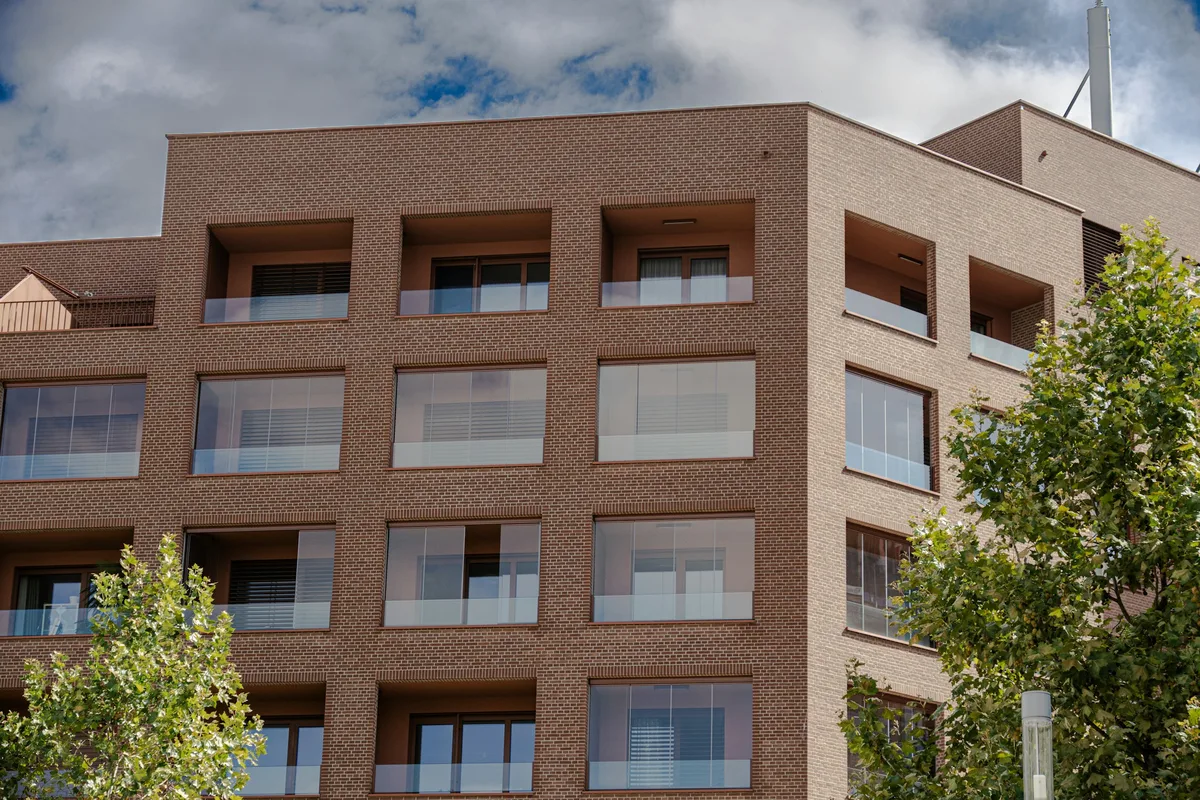
Modern housing developments often offer amenities that are hard to find in historic centres: lifts, underground garages, balconies, air conditioning and more practical layouts. For many guests, being able to reach the centre in 15–20 minutes is enough if they get a more comfortable stay in return.
In such locations, though, the actual quality of transport links is very important. Distance in kilometres matters much less than the real travel time to the city's key places.
The best location is the one that meets guests' needs
City centres and historic old towns remain attractive locations for short-term rental. In many cases they can deliver very good results, especially in cities with strong, year-round tourist traffic.
They should not, however, be treated as the only right choice. Being close to a hospital, an economic zone, office buildings or a university campus can prove just as valuable, and sometimes even more profitable. Especially when it lets you attract guests all year round and combine short bookings with mid-term stays. So a flat's potential is not decided by its address alone, but above all by the needs it meets and how effectively we can reach the right groups of guests.
That is why, before buying a property or starting to rent it out, it is worth analysing not only the distance from the centre, but also the character of the district, local sources of demand, seasonality and the potential to generate income all year round.